
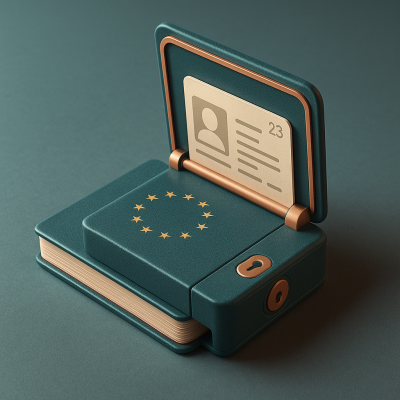
The EU Digital Identity Wallet—mandated by eIDAS 2.0 and rolling out across member states through 2025—is not just another authentication method. It is a universal identity layer that will become the standard way EU citizens prove who they are online. For system integrators and public-sector service providers, this is not optional. It is infrastructure.
What the wallet provides. The wallet stores verified identity attributes: name, date of birth, address, qualifications, and more. These attributes are cryptographically signed by trusted issuers. When a service requests an attribute, the wallet presents a verifiable credential without revealing more than necessary. This is selective disclosure—a fundamental shift from current authentication patterns where the service receives everything the identity provider sends.
The selective disclosure paradigm. Current authentication patterns are over-sharing: the service receives a full identity token with every claim the provider includes. The wallet paradigm is minimal disclosure: the service requests only the specific attributes it needs, and the wallet proves those attributes without revealing the underlying data. A service that needs to verify age does not need to know the date of birth. A service that needs to verify professional qualifications does not need to know the holder's address.
Architecture implications. Supporting the wallet requires three changes: an authentication endpoint that accepts wallet-issued verifiable credentials, a verification layer that checks credential signatures against trusted issuer registries, and a consent management layer that tracks what attributes were disclosed for what purpose. These changes touch the authentication module, the user profile model, and the audit logging system.
Why start now. The wallet is being rolled out progressively, but EU procurement tenders are already specifying wallet compatibility. Organizations that wait for universal adoption will face a migration bottleneck when wallet authentication becomes mandatory for public services. Those that implement the selective disclosure pattern now will find that it improves privacy, reduces data liability, and positions them favorably in EU procurement evaluations.
The identity layer is not going away. The question is whether your organization implements it proactively as architecture or reactively as compliance.